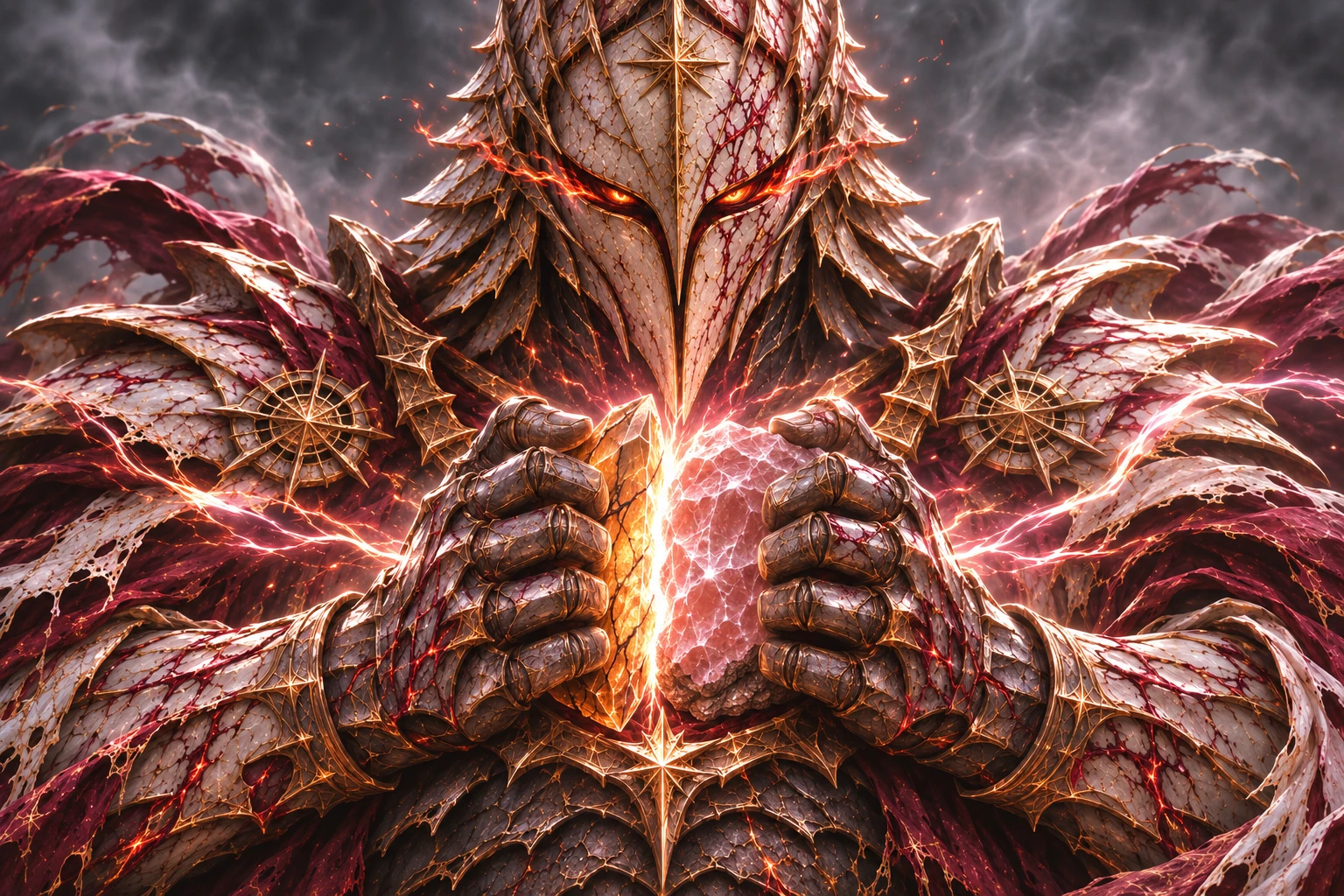
The Aurelian people worship Zerith, God of the Holy Fire. Every settlement in Aurelith tends a flame in his honour. When a family leaves to build a home elsewhere, they carry an ember from their village shrine to kindle their new hearth. Aurelian paladins kneel before that same fire to swear their first oath. Many take their vows at the very shrine where their parents once collected an ember.
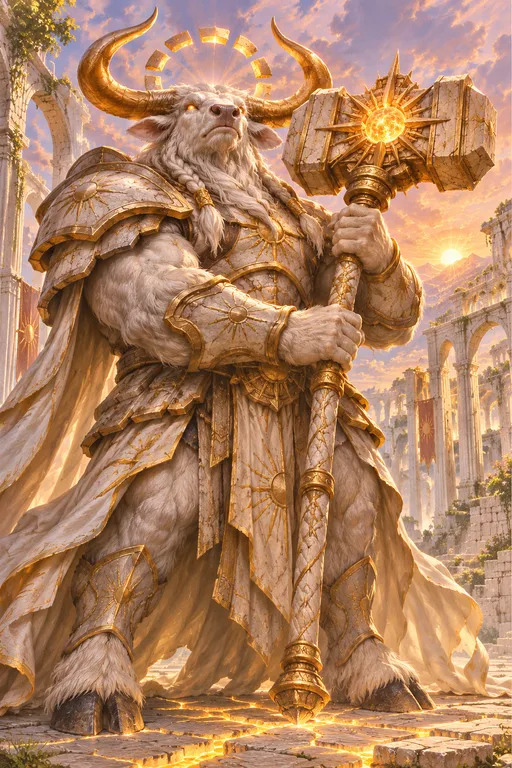
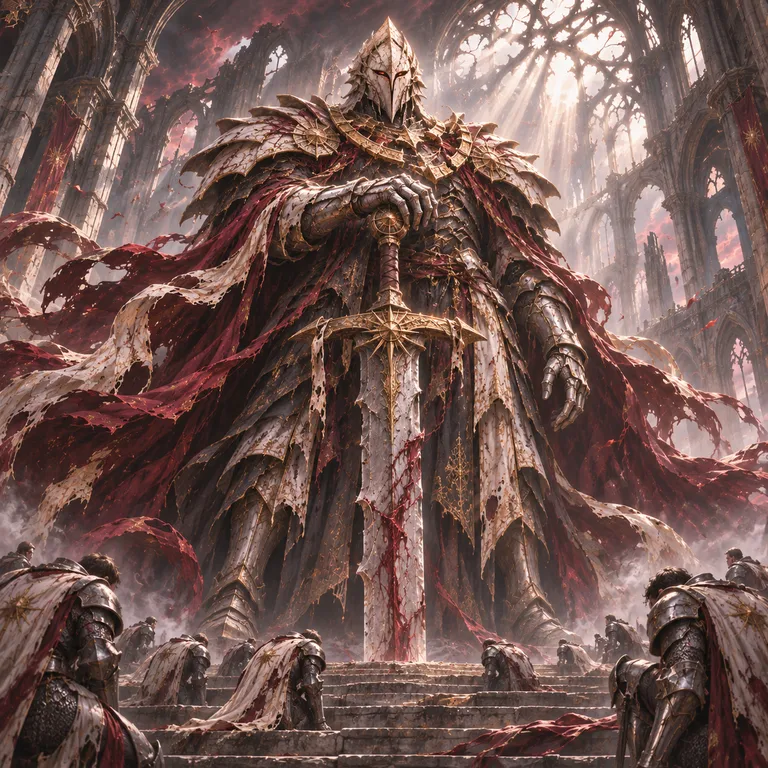
Auroth, Hammer of the First Dawn, commands the armies of Aurelith. Among the paladins who ride with him are Freya the Holy Fervor and Arazoth, her consort. Freya has spent years learning to read a shield wall. A gap between two shields or a standard dipping out of sight can draw her across the field before a captain has time to send for aid. Arazoth knows her habits well enough to move with her. By the time she reaches the soldiers who need her, he is already at her flank.
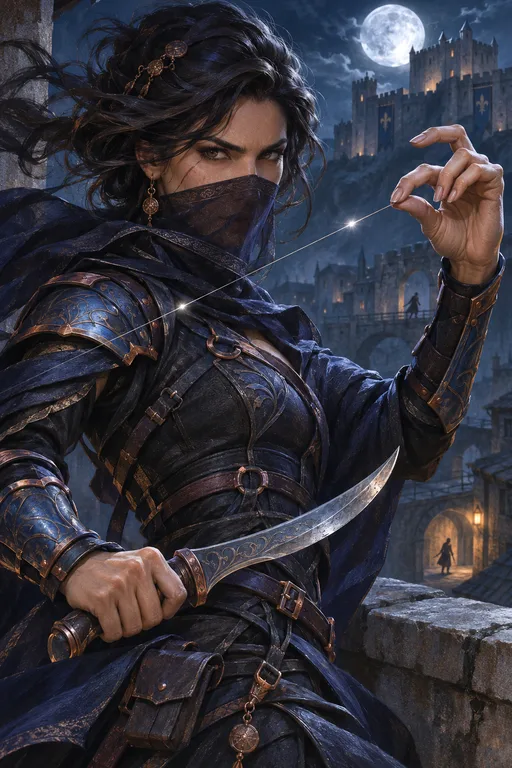
Auroth
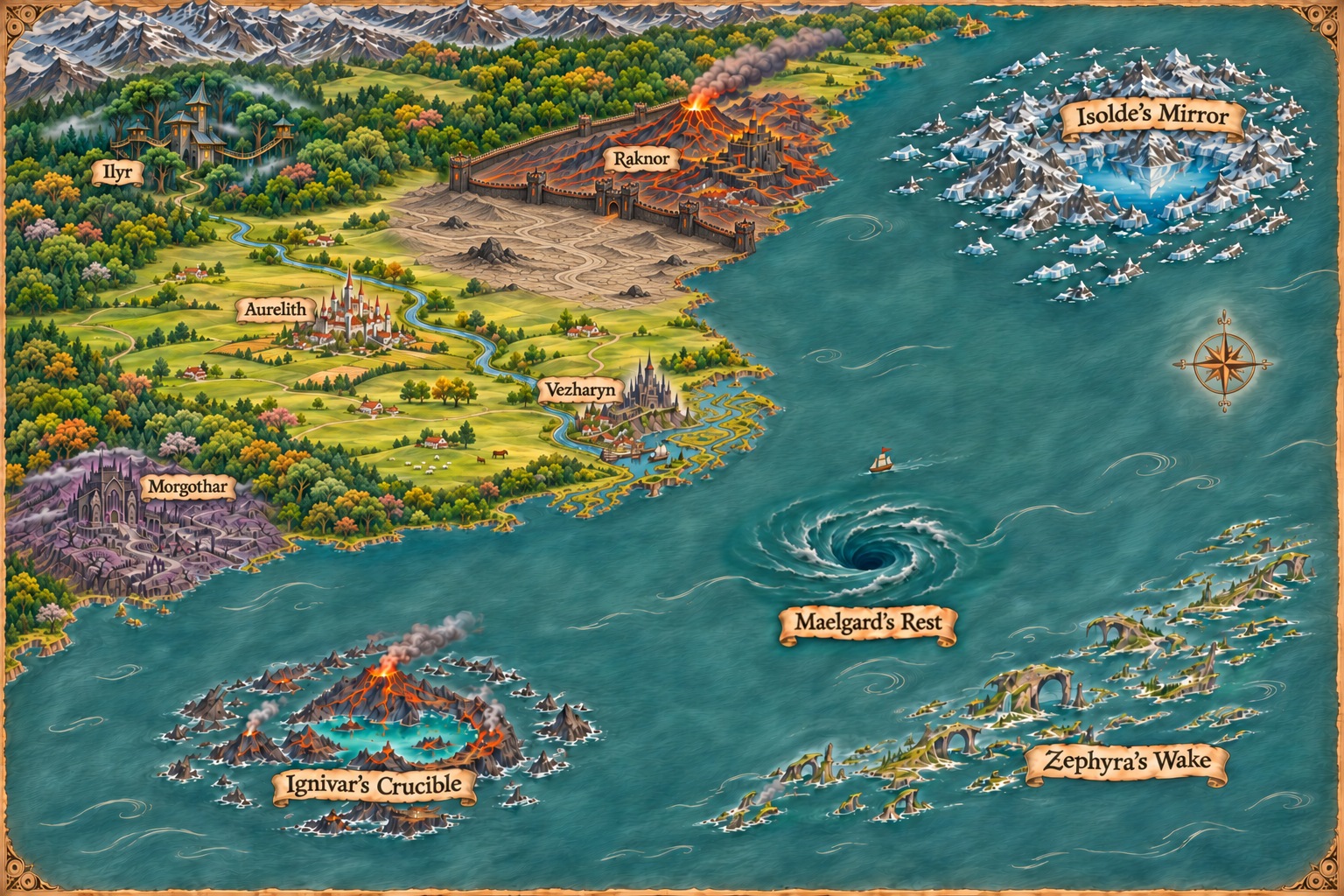
Raknor
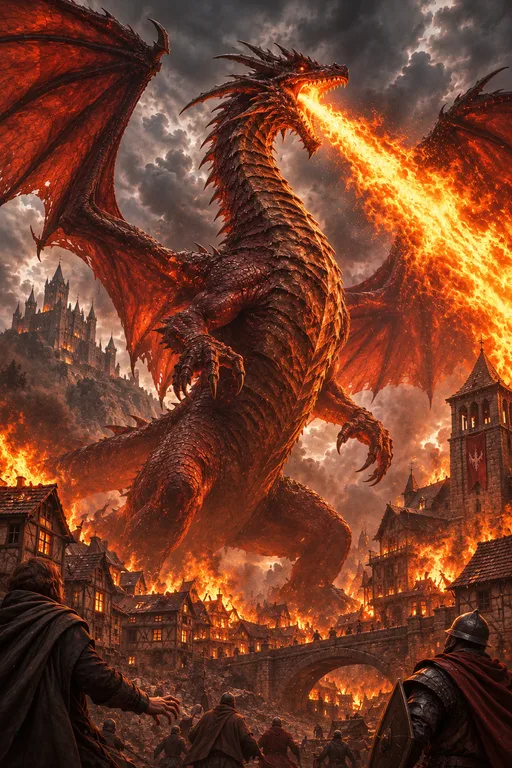
On a clear night, dragons returning to Raknor can see the glow of home from beyond the great wall. At the foot of the continent’s largest volcano, the Raknorians build their houses from burning volcanic stone. Dragon blood runs through this ancient people. Their children learn early to feel the low rumble that rises in a dragon’s chest before it breathes fire. It takes a keeper years to tell whether the beast means to strike or is simply afraid.
Jakarr, the Flamebound King, commands the armies of Raknor. Vaertah, Sovereign of Embers, tends the royal broods and oversees the keepers who train dragons for battle. A young dragon makes its first flight beyond the wall under her watch. When the riders return from war, families gather on the broad stone terraces to look for them. Most can pick out a familiar pair of wings long before they can see the rider.
Two dragons have defended Raknor for thousands of years. Ashreaper, Flame Devourer, can feed on the fire of a battlefield. Rhazek, the Worldpyre, can break a siege with his breath. Both swore to defend the Raknorian people before the first monarch took the throne. When Aethurion entrusted those people with a Crownshard, the ancient dragons understood that the fate of the realm had been placed in Raknorian hands. From that day, whenever the crown called upon them, Ashreaper and Rhazek came to hear the sovereigns speak. Whether they would fly to war still depended on what was asked of them.
Rhazek
Vezharyn
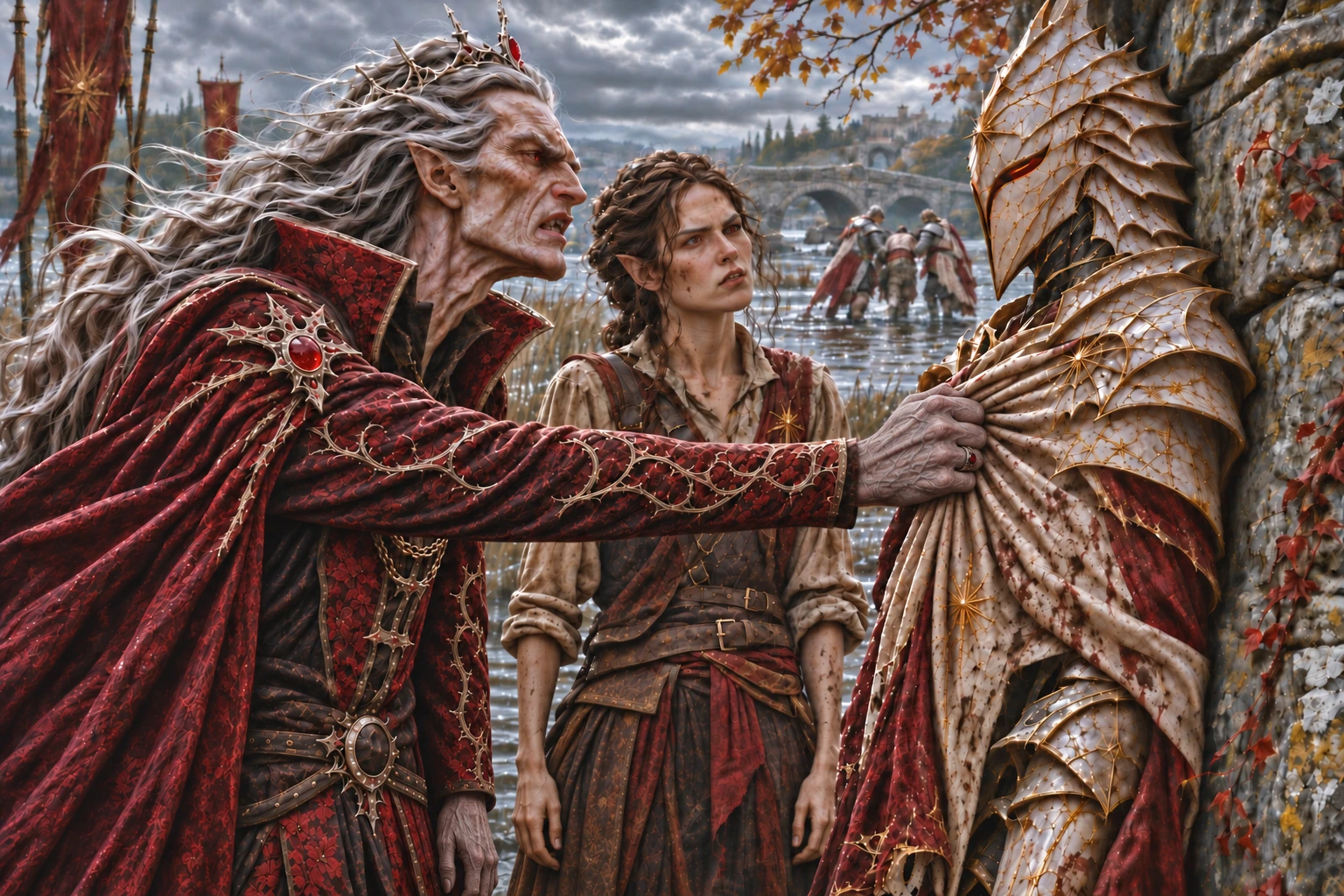
At the edge of the forests of Vezharyn, beside every road that leads into the kingdom, stands a boundary stone. Travellers are expected to stop there, speak their names and wait to be received. The Vezhari take pride in knowing who walks their lands. Those who pass a stone unannounced may be asked their business by something far older than a border guard.
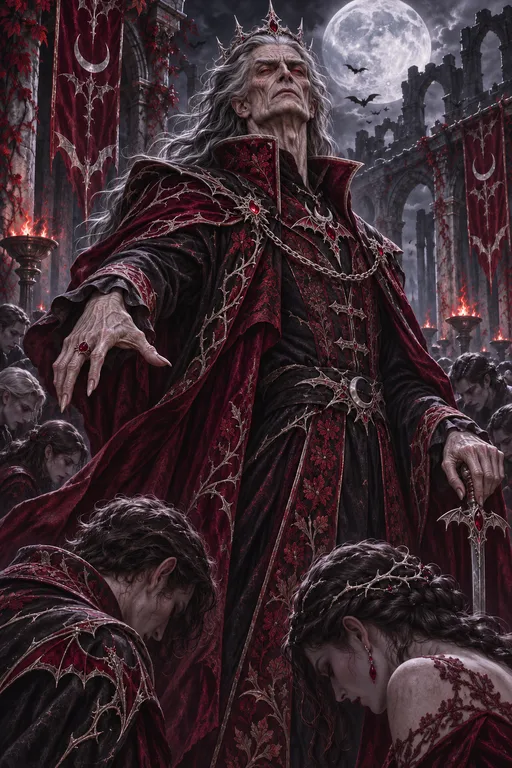
The Vezhari hunger for blood and for power, and both appetites have their customs. At court, noble families engrave their silver cups with the date an ancestor last drank at Radovan’s table. A lord with a hundred retainers may spend an entire supper envying the newer date on his neighbour’s cup. In a Vezhari home, the first cup of blood goes to the guest, who may drink or pass it on. Either way, the host answers for the guest’s safety. To shelter a wounded stranger until dawn and see them safely on their way is a point of honour among the Vezhari.
The creatures of the kingdom owe fealty to Radovan himself. Chief among the powers of the forest is Leshvar, Lord of the Woods. Even the highest noble must seek his leave to fell a single oak. When Radovan needs a road, he sends an emissary to Leshvar. The next morning, the woodcutters arrive with their axes and find the trees have already made way.
Two other ancient beings haunt the kingdom. Deep in the woods, Vesna waits in a cottage that unwanted visitors come upon at dusk. She offers them a seat by the fire and asks what they came looking for. Those who lie to her can recall the lie for the rest of their lives. It is the true answer they forget.
Rusalka haunts the waters of the delta. She calls to intruders from the far bank in the voice of someone they left at home. Vezhari boatmen teach their children one rule before they ever put an oar in their hands: If you hear your name across the water, wait until you see who called.
Radovan
Ilyr
In the forests of Ilyr, wooden walkways run between towers built among the branches. A visitor crossing one at dusk might pass close enough to a window to see a family at supper. A lamp on the sill means the household welcomes company. When the lamp goes out, even an old friend walks on. Ilyri children learn early how much trust it takes to live within earshot of one another.
The Ilyri follow the teachings of Nhal'Riz'Zir, the Unbound. Their god once existed as a single being. Three divine entities now bear the fragments of that existence: Nhal'zir, the Unspoken, Riz' Lahn, the Unheard, and Zir' Nahl, the Unseen. In their honour, an Ilyri apprentice takes an oath before being trusted with a blade. The apprentice names someone whose confidence they will keep, crosses the shrine without disturbing its hanging bells, and returns the blade to its keeper without being seen. The last two trials can be mastered in time. The first promise binds them for life.
Seyra, Mistress of the Veil, commands the assassins of Ilyr. She plans their operations with Vaelzareth, Lord of Shadows, whose magic can conceal an entire company among the trees. Before her assassins set out, Seyra walks the route with him and shows him where each of them must cross into the open. On the night itself, a sentry might watch a patch of moonlight on a bridge for hours and swear that nobody crossed it.
Seyra is usually the last to come home. From the watchtower, Vaelzareth counts her people back across the walkways. Only when he sees her does he let the shadows lift.
Seyra
Morgothar
In Morgothar, the reading of a will is sometimes interrupted by the deceased. A dead man may raise a finger to correct the name of his daughter, and someone who loved him will put his spectacles in his hand out of habit. Some families are granted a single summons and save it for years. A mason might leave instructions to call him back if the vault he built begins to crack. His children know which grave to visit. His apprentices know to bring the plans.
Many of the Morgothi were born elsewhere. Deserters, exiled sorcerers and physicians cast out for their experiments have all found a home here. A newcomer may take a new name at the gates. The first question is usually whether they managed to bring their notebooks. Walk past a workshop late enough and supper will still be on the step. Inside, a scholar may be listening to a dead woman repeat a sentence she has spoken every night for thirty years. Last night, she changed a word.
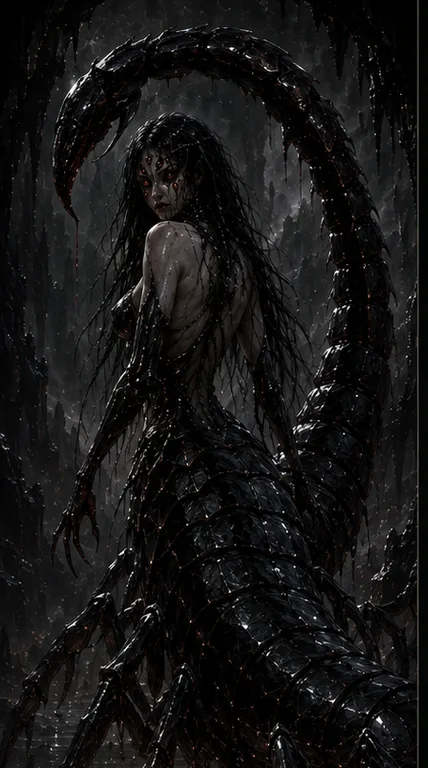
Their ruler, Morveth, the First Necromancer, created three monstrosities with minds of their own. When Velyss, the Venom Matriarch, first stirred beneath his hand, she turned to bite. Then she looked at him, recognised him and slowly drew back her fangs.
Nito, the Deathbringer, is one of Morveth’s greatest weapons. He can summon death itself upon any enemy he chooses. It comes in an instant. A knight in full armour can fall dead in the saddle while the horse carries on for several strides. The first time Morveth named someone for Nito to kill, Nito looked at the man, turned back to his maker and asked, quietly, “Why?”
Zareth, the Runelord Wight, woke to find Morveth’s runes cut into his bones. He studied the inscription along his forearm, held out his hand for the engraving tool and corrected one of the marks. The apprentices stepped away from the table. Morveth drew up a chair to see better.
Velyss
The Primordials
The Primordials have walked the world since its beginning. Aethurion gave them life while the first seas were still warm and the continents were taking shape. Each commands some part of the natural world. Long before anyone sailed these waters, three of their kind had already taken up watch on the islands beyond the mainland.
Isolde, Empress of the Stillwinter, keeps her vigil at Isolde’s Mirror. Even in summer, the sea freezes clear between the inner islands. From a boat at the edge of the ice, a sailor can look down through it and see the cliffs continuing far beneath the keel. In Ignivar’s Crucible, black islands rise around a flooded caldera. Ignivar, Sovereign of the Last Pyre, governs the fire beneath its bed. On quiet nights its glow reaches the surface, and fishing boats cast shadows on the underside of their sails. Farther east, the long stone arches of Zephyra’s Wake stand in the path of the ocean winds. Zephyra, Master of the Unbound Gale, can turn a gale through those narrow openings and bring a ship through on a single breath of wind.
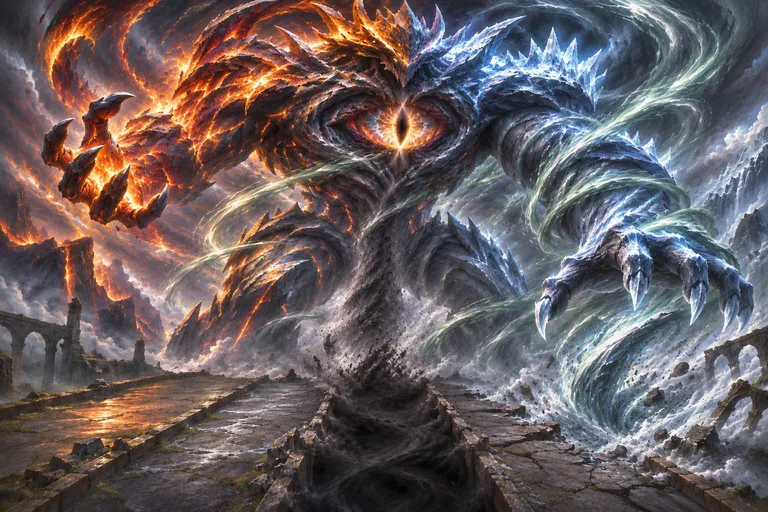
The three keep watch over an older work of Aethurion’s. He once sought to create a single guardian who could command every element. He gave that power to Mael’Gard, the World-Ender. When Mael’Gard tried to still a burning mountain, the cold split it open to its roots. Fire poured through the fractures. The wind he raised to drive the fire back carried it across the sea. By the time the other Primordials brought him down, whole stretches of coast had vanished. Aethurion’s attempt to give the world one guardian had come close to ending it.
Isolde, Ignivar and Zephyra bound Mael’Gard beneath the ocean floor and tied his prison to their own lives. Above him, the sea turns ceaselessly around a deep, dark eye. Sailors mark it on their charts as Maelgard’s Rest.
So long as even one of the three guardians lives, nothing can call him from the deep. Only when the last of them dies can Mael’Gard be summoned again.
Mael’Gard
The Oryndai
The Oryndai dwell in the Aevum, a cosmic realm entirely separate from the world of the five kingdoms. Sailors have crossed the ocean by its stars for centuries. Every one of those stars belongs to the same sky as their own shores. The Aevum lies beyond a different boundary altogether. No road leads there. Only the Oryndai can cross the divide between the two realms.
From the Aevum, the Oryndai observe the world and exercise power over it. In Aurelith, a keeper tending the sacred fire may ask Zerith to bear witness to an oath. The flame gives the keeper no glimpse into the Aevum. From the other side, Zerith can see the keeper, hear the words and decide what an oath sworn in his name is worth.
Among their own kind, the Oryndai have long memories. The drowning of the ancient coasts survives among mortals in fragments of legend. In the Aevum there are still those who remember the shape of those shores, and what it cost the world when Aethurion gave one guardian command of every element.
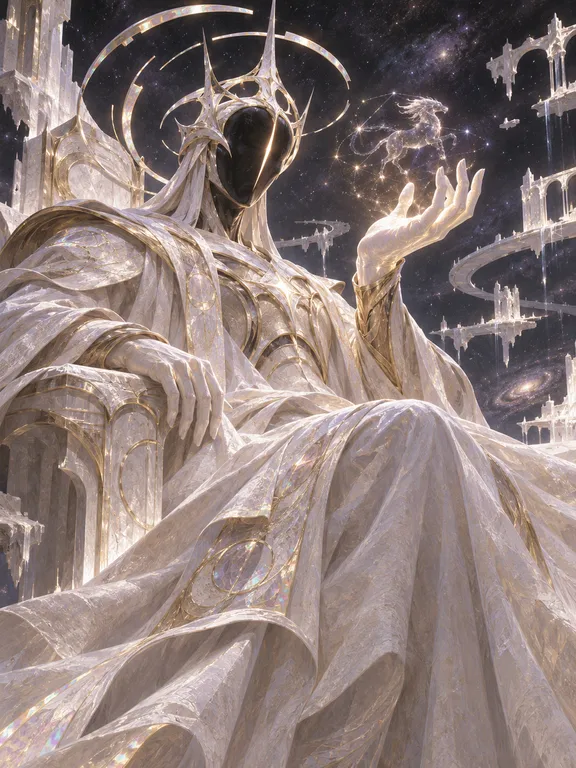
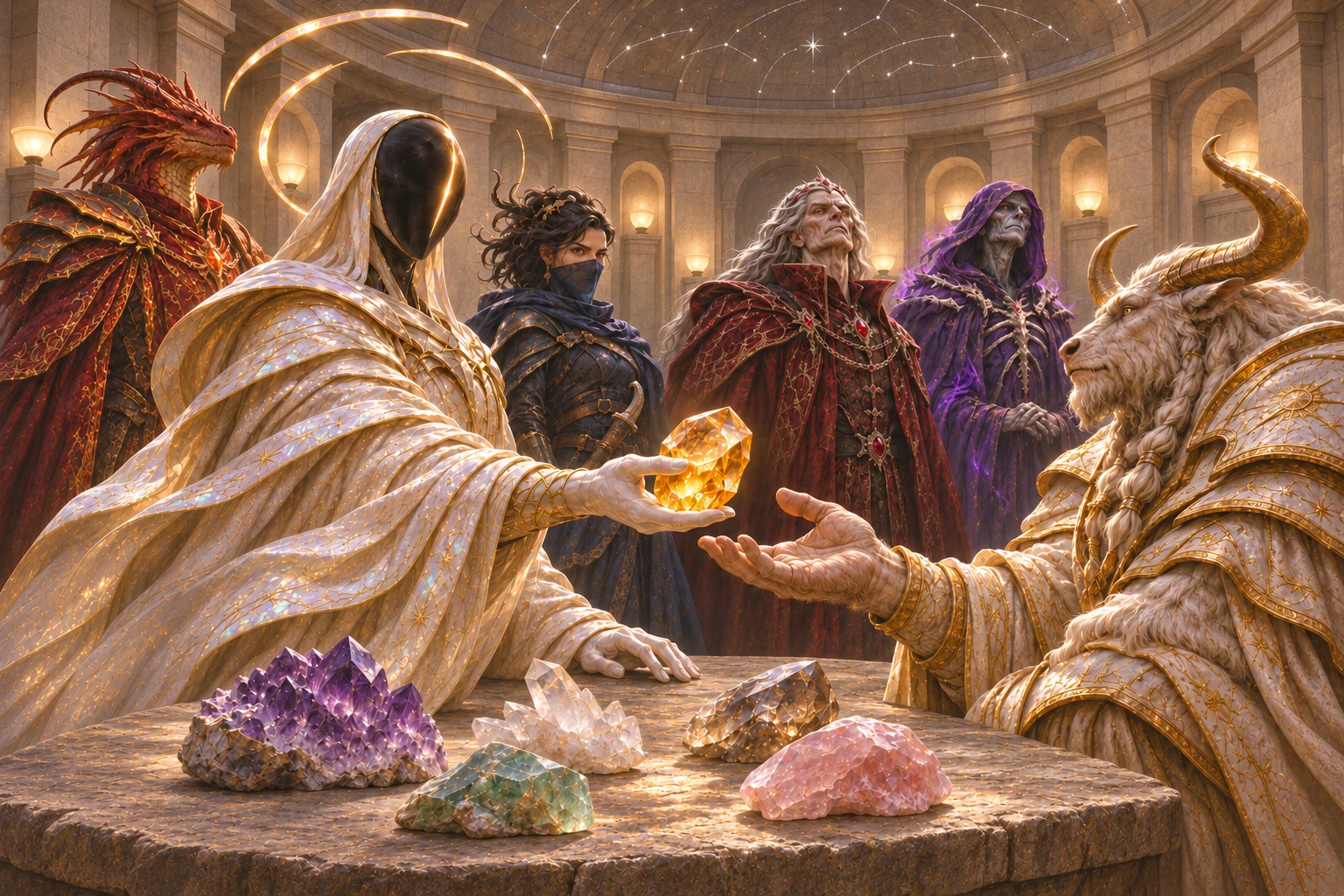
Aethurion watched from the Aevum as the kingdoms went to war over failing wells and fields. He could see what the rulers themselves could scarcely have known: beyond each army lay another people just as hungry as their own. When the time came to offer them a bargain, he crossed the divide. The rulers who gathered that day saw an Oryndai take the crown from his head.
Aethurion
The Oathbreakers
Vardren leads a people who have no kingdom of their own. Every Oathbreaker bears the corruption he laid upon them with his half of Aurelith’s Crownshard. Some followed him willingly before he ever used it. Most follow him now because of what it has done to them. A rider may have every reason to leave, may even know which road would take her home, and still feel a need stronger than any reason to turn her horse and find Vardren again.
The corruption is a death sentence. Each day it consumes a little more of the bearer’s soul. An Oathbreaker can still love someone, keep a promise and remember the life they had before. That is what makes it cruel. They understand what is being taken from them, and they know that when the last of their soul is gone, they will die. For most, even that knowledge cannot loosen Vardren’s hold.
The column travels slowly enough for its weakest members. At dusk the wagons form a crescent against the wind, and the last to arrive are given a place near the middle. An outsider may ride with them, share their supper and fight in their defence. Only those whom Vardren has corrupted are counted among the Oathbreakers.
When the fires are lit, one question passes from wagon to wagon: “Who have we given our word to?” Each household names the people it has promised to feed or shelter that night. If a rider is missing, someone goes back along the road to find them. The shard is what brings most of them back to Vardren. They go back for one another of their own accord.
Vardren
The Breaking of the Crown
Before the Crown was broken, a field of good earth could cost a hundred lives. When a well ran dry, families crossed into the next valley. The people who lived there had children of their own and little water to spare. They guarded their wells. Their neighbours came back with spears.
Aethurion saw what awaited them. A kingdom might win every battle and still inherit a land too poor to feed its people. If the wars continued, in time there would be no one left to inherit anything at all.
He called the rulers of the realms before him and offered them a bargain.
“I will give each of you the power to make what your people need. You may draw fresh water from dry stone and raise grain from barren earth. Your children shall never have to cross a border in search of bread. In return, I ask you to keep the peace.”
The rulers gave their word. Aethurion took the Crown from his head and broke it. From its pieces he formed stones, each holding a share of his power. To each realm he entrusted one. These were the first Crownshards.
That summer, on a stretch of ground two kingdoms had fought over for longer than anyone could remember, the last watchtower stood empty. The harvest had come in on both sides of the border.
The First Oathbreakers
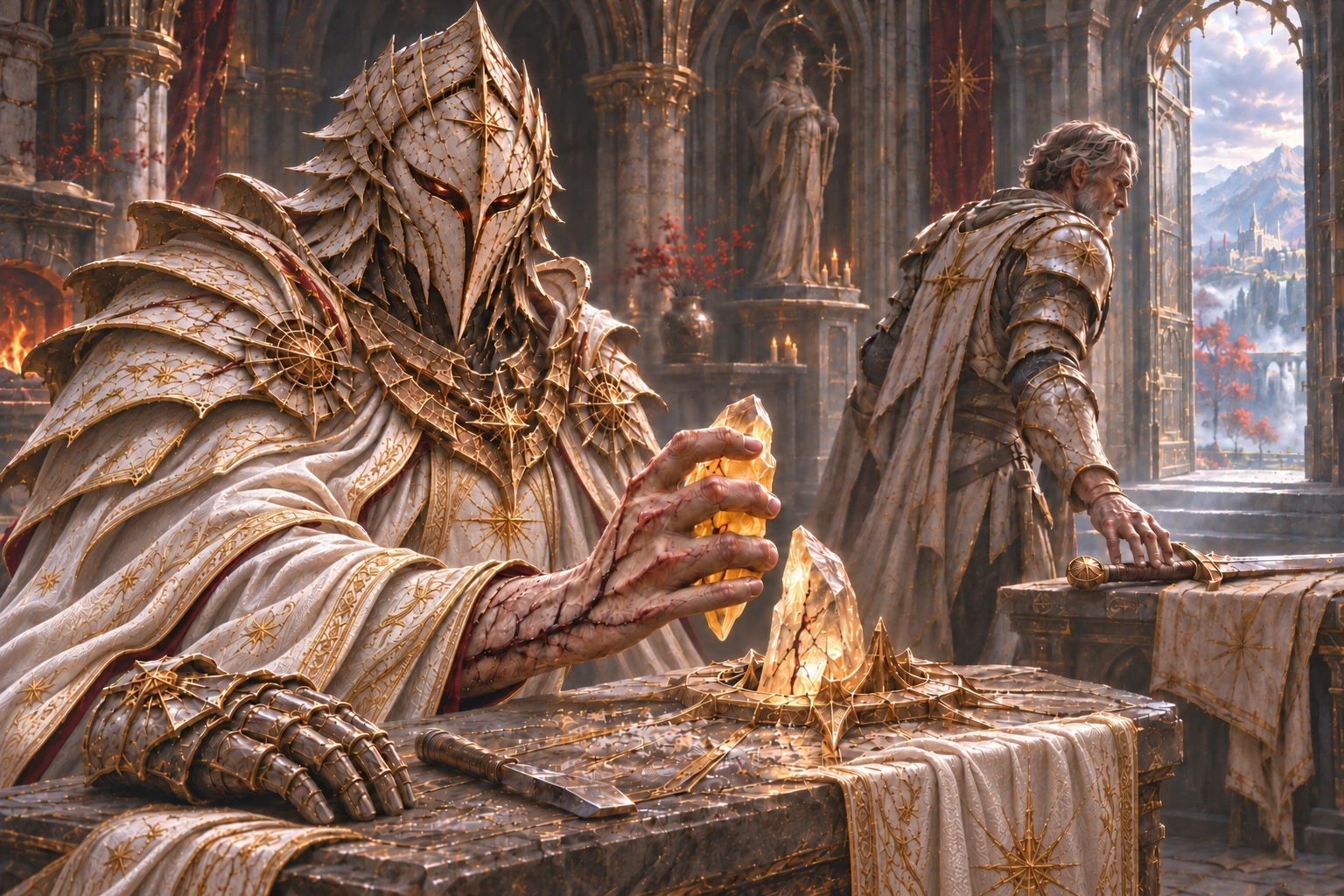
Vardren first saw the Crownshard used in the village where he had grown up. A winter flood had carried off the mill and spoiled the grain in every storehouse along the river. Auroth sent him ahead with the supply wagons. By the time they arrived, the sour smell of wet grain had reached the road. Vardren stood beside his mother as a keeper of the shard filled her empty flour bin. She ran a handful through her fingers, looking for husks as she always did. By noon she had dough rising under a cloth.
After that, Vardren volunteered for every escort that took the Crownshard beyond the capital. He learned how the keepers drew water from hard ground and how little of the stone’s power it took to feed a village. What troubled him was how much of the journey a hungry family had to make before a keeper ever heard of them. His mother’s petition had changed hands four times. He knew because he had gone looking for it. The last man to receive it had acted the same day. So had the first. Twelve days lay between their signatures.
Vardren asked Auroth to send keepers to live among the outer settlements. Auroth agreed. When Vardren asked for a piece of the Crownshard to place in their keeping, Auroth laid a hand on his shoulder.
“If we knew how to divide it safely, I would take the first piece to your mother myself. What shall I tell her if we break it and neither half can feed her?”
It was a fair question. Vardren spent the next year trying to answer it. Whenever a keeper drew on the Crownshard, light gathered on one side of the pale seam that ran through its heart. A moment later, the other side brightened in answer. The keeper could then ease the flow to a trickle or bring it to a stop. Vardren filled the margins of his drawings with the same observation: either side could bear the full light. It never occurred to him to ask why the light crossed the seam before it steadied.
His soldiers brought him accounts of villages that had waited for help. He read every one. In time, some wrote to thank him for the keepers Auroth had sent. Those letters lay unopened on his table. Long after the village ovens were full again, he was still awake in the hall, watching the light move through the stone. In every future he imagined, the hand that held the second half was his.
On the evening he finally took a chisel to the hall, he told his companions what he meant to do. Most had carried an ember from their village shrine when they first left home. A family could take fire from the common hearth and leave enough for those who stayed. Vardren made it sound much the same.
“Aethurion gave this stone to the people of Aurelith,” he said. “Which of us has ceased to be one of them?”
Some had served beside him for years. Others had children in the outer settlements and remembered what it was to wait. A few turned back at the door. Vardren let them go.
He set the chisel against the pale seam. The first blow sent a tremor through the floor. At the second, the guard nearest the door took a step forward. Before she could reach him, Vardren struck a third time.
Half the stone fell into his waiting hand. The other half stayed in its setting. Both still shone. For one glad instant, Vardren thought of Auroth. He wished he were there to see it.
Then the light in his palm gathered against the broken edge. Vardren waited for the answering pulse he had drawn a hundred times. Across the hall, the other half flickered in its setting. The light in his hand went on gathering until he could see the bones of his fingers through his skin. He tried to ease the flow as he had seen the keepers do. A fresh surge ran up his arm.
The guard called for Auroth. One of Vardren’s oldest companions lowered his sword.
“We have our share,” the man said. “Let me go home.”
Vardren felt the shard answer before he spoke. For a year he had imagined walking out of this hall with the stone in his hand and these people beside him. Now one of them meant to leave, and the power coursing through him seized on the one thing he wanted most. For the first time since the stone had broken, his hand was steady.
He could have opened it. Instead, he closed his fingers around the shard.
“Stay with me.”
A dark vein spread from his grip through the crystal. Its twin crept beneath the skin of his wrist. The broken shard had taken the shape of his will, and the corruption passed through Vardren first. When he reached for his companions through the stone, it was that same corruption he passed on.
The man who had asked to leave picked up his sword. He still wanted to go home. He could picture his wife lifting the latch at the sound of his step. Yet when Vardren turned towards the door, the thought of letting him go alone filled him with such dread that he hurried to his side. Around the hall, the others fell in behind them.
By morning, Aurelith had a name for the company that had taken half its Crownshard: the Oathbreakers. Auroth called his soldiers to muster. On the road beyond the city, Vardren’s companions could still see the towers of their homes when they looked back. Most found they could walk only where he led.
It would take longer for them to understand the price. The corruption that bound them to Vardren fed on their souls, taking a little more each day. Whatever years remained to them, it would be there for every one.
A Place at Radovan’s Fire
Vardren’s company reached the boundary stone of Vezharyn shortly before dark. By then Auroth’s riders were close enough for the people at the rear of the column to recognise some of the horses. Vardren could have reached the trees before them. The wounded would have been left on the road. He stood beside the stone, gave his name and waited.
Radovan came to meet him. He listened while Vardren asked leave to bring his people into the kingdom. Then he walked past him to a woman sitting on the shaft of a wagon, binding up her foot.
“Do you wish to come into my country?”
“I wish to go home,” she said.
Radovan glanced back along the road. “Your countrymen are coming. You could wait for them here.”
She drew the binding tight. “My lord, if you mean to make me stay behind him, you will have to hold me.”
Radovan had wanted an honest account of what the broken stone could do. He had expected to have to bargain with Vardren to get one. He offered the woman his arm and helped her the rest of the way to the trees.
That night, in sight of the Aurelian riders, Radovan gave Vardren the first cup at his fire. The offer extended to everyone who had stopped at the stone. By the custom of the Vezhari, each of them was now under his protection.
Auroth arrived the following morning. He brought the divisions of the watch from the night the Crownshard was broken. Beside each missing soldier’s name, someone had written where their family could be found. He gave the rolls to Radovan and asked him to read them before he answered.
“I came for Vardren and the stone,” Auroth said. “As for the others, let me speak to them. There are families on that list who would walk here barefoot for the answer you owe them.”
Radovan had the rolls copied. His own riders would carry word to every household that could be reached. Auroth could come in under his roof and speak to anyone willing to see him. Vardren and the shard would remain.
“You have seen what he does to a man who asks to leave,” Auroth said.
“I have. One of your soldiers told me herself. She is asleep in my house, and I gave my word before she closed her eyes. What would you have me tell her when she wakes?”
“Tell her I came.”
Auroth took the original rolls home with him.
When he asked Seyra and Jakarr for aid, he laid those same pages before them. Seyra read as far as the account of the soldier who had lowered his sword. What troubled her was how little anyone watching him could have known. He had put it down of his own accord. A moment later, he had picked it up again. How was a commander to recognise which order her people had been free to obey? She sent scouts ahead to find Vardren among the camps and keep him in sight.
Jakarr took longer. A young dragon could carry a wounded rider home from almost anywhere on that stretch of coast. A rider who could be made to turn against the homes below was another matter. He asked Vaertah how many of their keepers she would trust to recognise such a change in someone flying beside them. She considered the names until evening. In the end she gave him his answer.
“From the next saddle? I could not promise you I would recognise it in you.”
Jakarr committed his riders that night.
So the armies of Aurelith, Ilyr and Raknor came together on the road to Vezharyn. Through the trees beyond the boundary stone they could see the fires of Radovan’s host, and among them the smaller cooking fires of the Oathbreakers. Auroth’s orders for the crossing went out before dawn. Written beneath them, for every captain to read, was a final instruction: anyone who came out of those woods asking to go home was to be given an escort.
The Borrowed Crownshard
Vardren knew they were losing when the wounded began coming back on foot. The wagons that had carried them from the fighting all morning were needed at the crossings. By midday the western bridge was in Auroth’s hands, and the keepers on the eastern bank were turning their dragons for another pass. Radovan came down from the woods with half his guard. He put a spear into Vardren’s hand.
“Keep this road open. There are still people coming.”
Then he went back for them.
Beside the road, the Crownshard of Vezharyn lay in the keeping of three attendants. For most of the morning they had used it to draw clean water for the wounded. One of them was kneeling in the mud, holding a cup to a boy’s mouth, when Vardren stepped past her and took the stone.
“Has Radovan sent you?” she asked.
Vardren heard her. He had time to answer. He closed his left hand around the Crownshard and drew the broken half of Aurelith’s from beneath his coat.
For the first time since he had split it, he felt an answering pulse.
Then another came, too soon. The whole stone of Vezharyn answered every surge from the broken half, and each answer came back stronger. Within moments the stones were beating together so fiercely that Vardren’s fingers had gone numb. Beyond the bridge he saw the gold of the Aurelian standards. His own people were still coming down the road with Auroth’s soldiers close behind them. One clear thought held in his mind. Let mine come through.
The first rank of pursuers fell where they stood. Farther back, an Aurelian standard dipped into the river. A dragon turned overhead, wings beating hard enough to scatter the reeds along the bank. Its Raknorian rider pitched from the saddle before it could climb. The force went on through the trees, reaching even the Ilyri who had kept out of sight of the fighting. Vardren felt it travelling still. He tore his hands apart.
The road stayed open. An Oathbreaker limped past him with a Vezhari guardsman leaning on her shoulder. Others followed. Across the water, the dragon had landed beside its rider and was pushing at his arm with its muzzle. Of the allied host that had closed on the crossings that morning, no formation remained to answer a command.
Radovan found Vardren sitting against the boundary stone. The attendant who had been drawing water for the wounded stood a few paces off. Her hands were still muddy to the wrists.
Vardren rose and held out the Crownshard. “The crossing is ours.”
Radovan took the stone. “Who gave it to you?”
“I took it myself.”
“She asked you a question when you walked past her. Did you hear it?”
Vardren looked at the attendant. “I did.”
“Then answer her now. In whose name did you take the Crownshard of Vezharyn?”
Men were coming off the bridge with the wounded between them. Vardren waited for them to pass. Radovan caught him by the front of his coat.
“Answer her!”
“In my own.”
Radovan shoved him back against the stone. “I drank with you in sight of Auroth’s riders. When he came for you, I stood here and told him you were under my protection. That woman saw me do it. Is that why you kept walking when she called after you? Because you knew she would sooner doubt her orders than believe my guest had come to steal from me?”
“We were losing the bridge,” Vardren said. “Your own guard was still out there. I got them home.”
“Yes. My sister’s son came back across that bridge. I saw him. Now tell me what I am to say to his mother when she asks how close you came to killing him.”
Vardren opened his mouth. He had felt the force pass through the ranks, across the water and into the woods. He had pulled the stones apart when it had already gone farther than he intended. He could give Radovan no answer.
Radovan let go of his coat. His voice still carried to the men on the bridge.
“Three days, Vardren. My healers will tend your wounded. You may bury your dead in our ground. On the third morning, take your people out of my kingdom. If you ever come to one of my boundary stones again, you had better remember what they are there for.”
Vardren bowed his head. “We will be gone.”
On the third morning, the attendant met the column at the boundary. She had brought water for the journey and went from wagon to wagon filling whatever people held out to her. Vardren waited until she had finished before giving the order to move.
At the fork, he could see the road west towards Aurelith. The northern road would take them within sight of the watchtowers of Ilyr. Beyond those lay Raknor, where families would already be watching the sky for riders who would never come home. He had returned Radovan’s stone. There was no returning what he had done with it.
Vardren turned off the road. One by one, the wagons followed him into the open country.
What Radovan Kept
After the last Oathbreaker wagon had gone, Radovan took his sister to the western bridge. Her son had been asleep when she arrived. She had sat beside his bed long enough to hear him complain about the broth, and only then had she trusted anyone who told her he would live.
“Where was he?” she asked.
Radovan showed her. Halfway across, by the place where a cartwheel had torn a length of railing loose.
“And where did the first man fall?”
Radovan pointed again. His sister looked at the distance between the two places. Then she went back to her son.
He stayed on the bridge. He had put that question to Vardren in anger, knowing full well the man could never tell him how close the boy had come to dying. Standing there now, Radovan had to answer a harder question of his own. If Vardren had come to him with both hands open and asked permission, what would he have said?
He would have wanted to know how far the force might reach. He would have asked whether his guardsmen were clear. And while he asked, his nephew would still have been on that bridge.
He understood Vardren’s decision better than he had three days ago. It made him angrier still. He might have consented. He might have spent the rest of his life answering for it. Vardren had taken that choice from him, and every family in Vezharyn had stood to pay for his mistake.
That evening he summoned the attendant from the crossing. She brought her account written out in a careful hand. At the end she had offered to surrender her office.
Radovan struck out the last sentence and gave the paper back.
“Tomorrow you will teach my guard what happened,” he said. “Begin with the water you were drawing. I want them to remember why the stone was there.”
When she had gone, he took out a chart of the region and put his finger on the fork where Vardren’s wagons had left the road. Somewhere beyond it lay half a Crownshard. He had seen what it could do beside his own. For a long while he considered how few riders it would take to follow those tracks.
He rolled the chart up himself. By morning he still knew exactly where he had put his finger.
The Council of Three
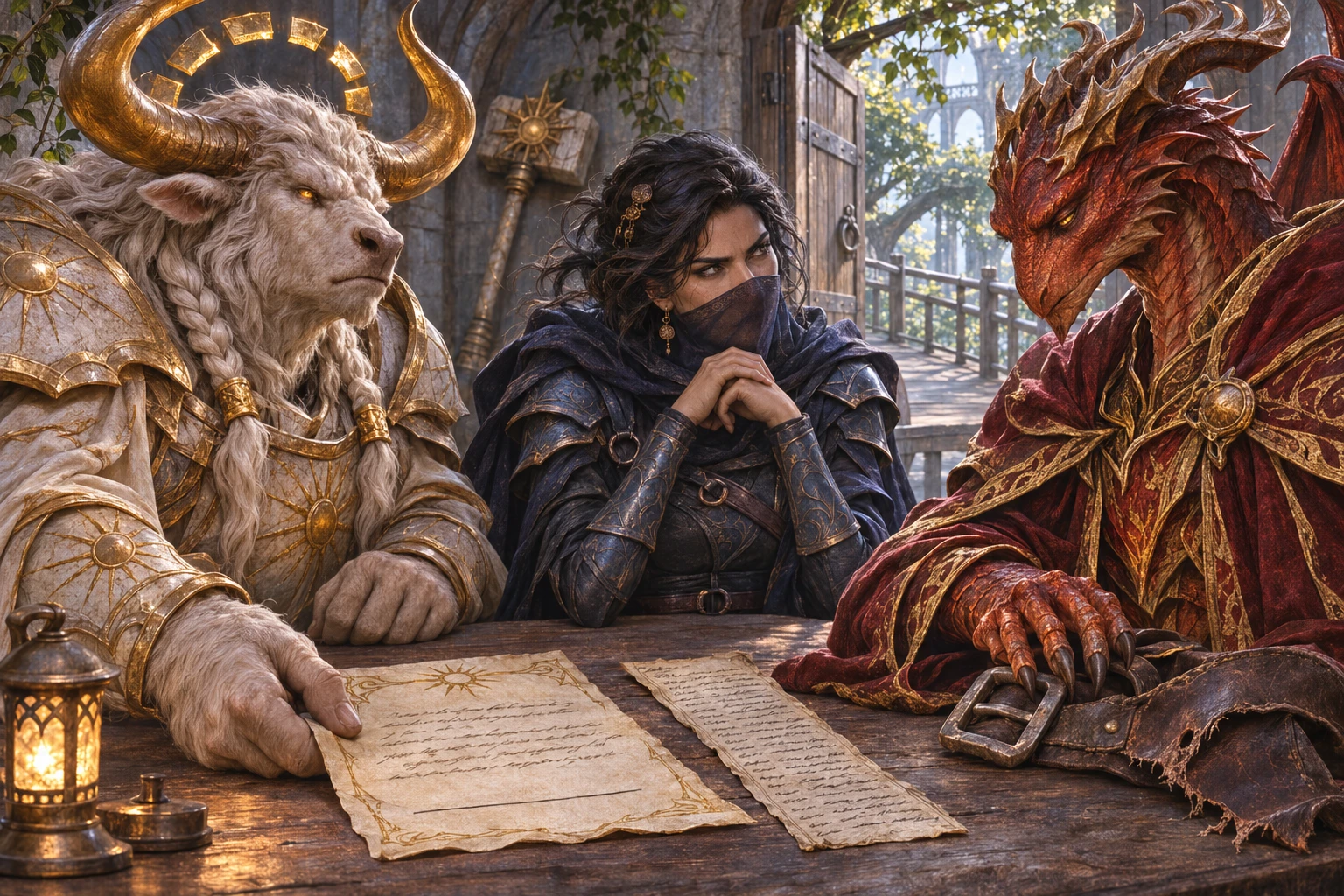
Seyra chose a room in Ilyr with a door onto one of the high walkways. The three rulers came without their guards. Auroth brought the names of the dead whose families had yet to be told. Jakarr brought a Raknorian saddle buckle, returned to him by a dragon that had found its way home with the saddle empty. He kept turning it in his hand as the others spoke.
They agreed on one thing before they sat down. Vardren could never again be allowed within reach of a whole Crownshard.
“Then help me bring our half home,” Auroth said.
To him it was the plainest part of the matter. The shard had been cut from the stone entrusted to Aurelith. People were dying a little each day because of what Vardren had done to it. The keepers who had tended it whole were still alive. If anyone could free those people, surely they deserved the chance.
Seyra asked what the keepers intended to do first.
“Bring the halves together and see whether they answer one another as they did before.”
Jakarr set the buckle down. “That is very nearly what Vardren thought he was doing.”
Auroth drew breath to answer. For a moment he was back in the hall, his hand on Vardren’s shoulder, asking what they would tell a hungry woman if they broke the stone and neither half could feed her. He had thought himself the cautious one then. Across the table, Jakarr was waiting for an assurance he had never been willing to give Vardren.
“If it comes to Raknor,” Jakarr said, “we can keep it beyond the wall, well away from our own stone. Vaertah can have a rider in the air before anyone reaches the gate. Give me somewhere safer to put it and I will hear you.”
“Safer for whom?” Seyra asked.
“For the people who would otherwise have to stand in its way.”
“That was my army too, Jakarr.”
She spoke quietly. He picked up the buckle again.
Seyra had sent her scouts into those woods because concealment had brought them home from a hundred other fields. Some had died in places where nobody even knew to look for them. It had taken her six days to find the last pair. A higher wall would have made no difference. What Ilyr could offer was a place no enemy could find. She proposed that her people take the shard and that its resting place be known only to her.
Jakarr asked how the other two kingdoms would know it remained there.
“You would have my word.”
“I gave you mine about the wall,” he said. “You still wanted to know who stood behind it.”
By late afternoon they had covered a sheet of paper with terms for recovering the shard. They agreed to spare the people travelling under its influence. They agreed to offer them shelter. The final line named the kingdom that would take custody. Three times the scribe was called in from the walkway. Three times he went out again with that line empty.
At the door, Auroth asked them for one last undertaking. Would they at least tell each other when their scouts found Vardren?
Seyra looked at Jakarr. Jakarr looked down at the buckle in his palm. Auroth folded the unfinished terms and put them away. He had his answer. So did they.
The News in Morgothar
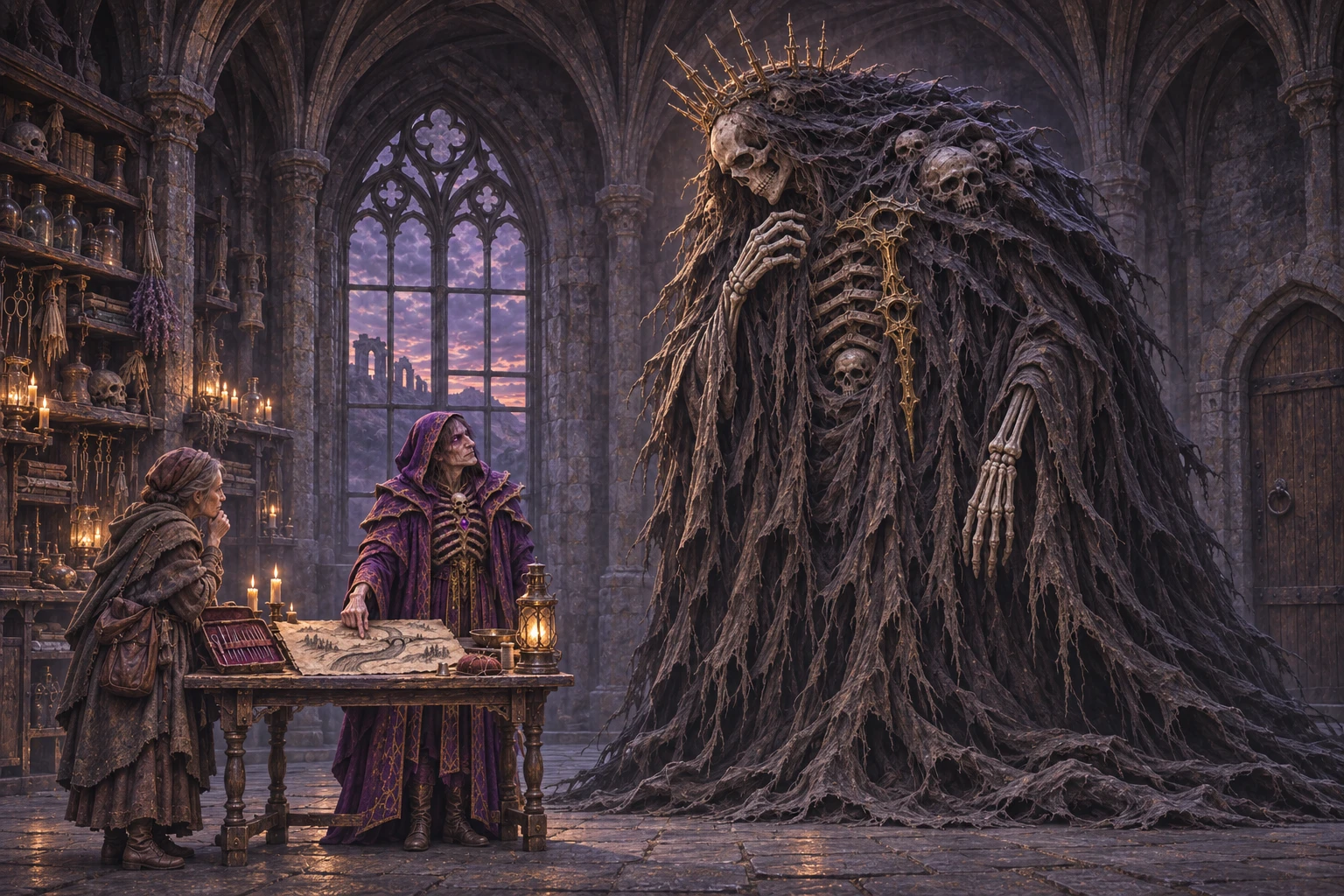
Morveth first heard about the battle from a maker of surgical needles. She had gone west with two cases of her best work, expecting the healers to buy everything she had. She came home with most of the needles and a question she had travelled three nights to ask him.
“How does a man die quickly enough to leave a mouthful of water in his throat?”
She had helped lay out the dead at the crossing. One of the Aurelian soldiers had been drinking when he fell. His cup had landed in the mud beside him. She had examined him herself and found nothing to explain his death. There had been dozens like him within the small stretch of ground where she worked.
Morveth cleared a place at his table. “Tell me where you were standing.”
She drew the bridge, the bank and the road. He let her finish before he asked about the stones. She had seen one in each of Vardren’s hands. Afterwards she had watched him give the larger one back to Radovan.
“And the smaller?”
“He kept it.”
Morveth glanced towards the far end of the room. Nito was standing by the window. Of all the beings Morveth had made, Nito alone could look upon any living enemy and call death down upon them.
“Could you have done this from where he stood?” Morveth asked.
Nito studied the drawing. “Which of them?”
Morveth laid his finger on the western bank. “All of them.”
For the first time since the needle-maker had entered the room, Nito looked directly at him.
Morveth had spent years learning how to give a creature power over a single life. At a river crossing, a man with no training in his art had held two stones together for a few moments. One stone had even been broken. Until that evening Morveth had been content to leave the affairs of the western kingdoms to those obliged to live among them.
He paid the needle-maker for both cases. His own people could use the instruments, and he wanted her free to leave again in the morning. He gave her money for the journey and the names of two Morgothi who would go with her.
“Find the road Vardren took,” he said. “When you catch up with the wagons, offer the wounded whatever care they will accept. Come back and tell me where they mean to spend the winter.”
“And if they ask who sent me?”
“Tell them my name.” Morveth drew her map closer. “I would like Vardren to know there is still one door open to him.”